
Biometric Time Attendance Systems in Kenya: What HR Managers and Business Owners Need to Know
For HR managers overseeing dozens or hundreds of employees, and business owners accountable for payroll accuracy, attendance data is one of the most consequential — and most frequently manipulated — datasets in any organisation. Manual registers, punch cards, and PIN-based clocking systems share a fundamental vulnerability: they rely on employee honesty and administrative diligence. Biometric time attendance systems in Kenya address this vulnerability at the hardware level, making fraudulent clock-ins structurally impossible.
This guide explains how these systems work, what differentiates reliable deployments from poor ones, and what decision-makers should evaluate before investing.
What Is a Biometric Time Attendance System?
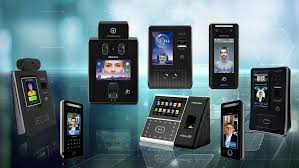
A biometric time attendance system is a hardware-and-software solution that records employee working hours using unique physiological identifiers — most commonly fingerprints, facial geometry, palm vein patterns, or iris scans — rather than PINs, passwords, or ID cards that can be shared, lost, or duplicated.
The device captures a biometric sample, matches it against an encrypted template stored on the unit or in the cloud, and logs a time-stamped attendance record. That record is then transmitted — via LAN, Wi-Fi, or mobile data — to management software where HR teams can view dashboards, generate payroll-ready reports, manage shift schedules, and flag attendance anomalies.
The key distinction from older card-based or PIN systems is verification certainty. A proximity card proves that a card was present; a biometric scan proves that a specific registered person was present.
Why Kenyan Businesses Are Adopting Biometric Time Attendance
Organisations across Kenya — from Nairobi-based corporate offices to manufacturing plants in Mombasa and agricultural operations in the Rift Valley — have accelerated adoption of these systems over the past five years. Several factors explain this trend:
- Buddy punching elimination: In environments where multiple shifts operate, employees clocking in on behalf of absent colleagues is a documented payroll cost. A biometric verification step removes this possibility entirely.
- Labour law compliance: Kenya’s Employment Act requires accurate records of working hours, overtime, and leave. Automated biometric logs produce auditable evidence of compliance without manual data entry.
- Payroll accuracy: Attendance data that flows directly into payroll software eliminates the rounding errors, retrospective adjustments, and deliberate miscalculations that inflate payroll costs.
- Multi-site visibility: Cloud-connected biometric terminals allow HR teams to monitor attendance across multiple branches from a single dashboard — a significant advantage for retail chains, hospitality groups, and NGOs with field offices.
- Reduced administrative overhead: Automated exception reports — late arrivals, early departures, absent employees — reach HR desks in real time, removing the need for supervisors to manually collate attendance data.
The Four Core Biometric Technologies
Not all biometric modalities suit every environment. HR managers should understand the practical differences before specifying a system.
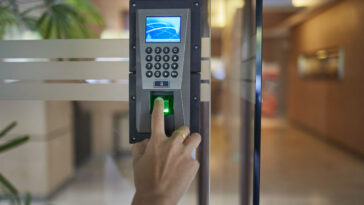
Fingerprint Recognition
The most widely deployed modality in Kenya due to its low cost per device, compact form factor, and mature accuracy. Capacitive sensors perform better in humid or dusty environments common in manufacturing and construction. Limitation: fingerprint readers struggle with worn, calloused, or wet fingertips — a real consideration in manual labour settings.
Facial Recognition
Facial recognition terminals are contactless, faster in high-traffic environments, and perform well in office settings with consistent lighting. Modern visible-light facial recognition does not require infrared illumination and functions effectively in Kenya’s ambient light conditions. Increasingly preferred by corporate offices, hospitals, and schools.
Palm Recognition
Palm vein recognition is hygienic, contactless, and highly accurate. Particularly suited to healthcare environments where infection control protocols make shared-contact devices problematic. Hardware cost is higher than fingerprint, but total deployment cost is often justified by accuracy and hygiene advantages.
RFID / Smart Card (Hybrid)
Several devices combine biometric and RFID card verification, offering fallback options where biometric reads fail — for example, for temporary staff or visitors who have not been enrolled. Hybrid devices are a practical choice for organisations transitioning from card-only systems.
What to Evaluate Before Purchasing
Biometric time attendance systems in Kenya range from entry-level fingerprint terminals to enterprise-grade facial recognition platforms with cloud management. The right configuration depends on:
- Workforce size: Devices have rated user capacities — from 200 enrolled users on a basic model to 50,000+ on enterprise terminals. Selecting a device near its capacity ceiling creates delays at peak entry times.
- Environment: Indoor, climate-controlled offices have different hardware requirements than outdoor construction sites. Check the device’s IP rating and operating temperature range.
- Connectivity: On-premise deployments using ZKBioTime 9.5 require local server infrastructure; cloud-based BioTime Cloud deployments need reliable internet. Assess your IT environment before specifying software.
- Payroll integration: Confirm the attendance management software can export data in a format compatible with your existing payroll platform — Sage, QuickBooks, or a custom system.
- After-sales support: Hardware reliability is only as useful as the support infrastructure behind it. Prioritise suppliers with a physical presence in Kenya who can provide on-site support and firmware updates.
Common Implementation Mistakes to Avoid
Organisations that experience poor results from biometric time attendance systems in Kenya typically encounter one of the following failures:
- Insufficient enrollment: Rushed fingerprint scans or low-light facial registration leads to high rejection rates at the terminal. Enrollment should be conducted under controlled conditions with trained staff.
- No fallback authentication: A device with no backup option creates congestion when biometric reads fail — for example, after an employee injures a hand. All deployments should include a fallback method.
- Hardware without software clarity: Organisations that buy devices without assessing the management software often find they cannot generate the reports their payroll or HR teams need.
- Neglecting network infrastructure: Devices that cannot communicate with the server due to unstable connections will accumulate records locally and sync in bulk, creating administrative backlogs.
Frequently Asked Questions
Are biometric time attendance systems legal in Kenya?
Yes. These systems are widely deployed by public and private sector organisations in Kenya. The Data Protection Act (2019) governs how biometric data must be collected, stored, and processed. Organisations are required to inform employees of data collection, obtain consent, and implement appropriate security measures for stored templates.
How long does implementation take?
A standard deployment for a single-site business — including device installation, network configuration, software setup, and employee enrollment — typically takes one to three days. Multi-site rollouts may require phased deployment over several weeks.
Can the system work without internet?
Yes. ZKTeco devices store records locally on the device during network outages and sync automatically when connectivity is restored — particularly valuable in areas of Kenya with inconsistent internet service.
What is the price of a biometric time attendance system in Kenya?
Pricing varies by modality, capacity, and software tier. Fingerprint terminals represent the lowest entry point; facial recognition terminals with cloud connectivity are priced higher. Contact Shoptechy for a current price list and quotation tailored to your workforce size.
The Takeaway for HR and Business Decision-Makers
Biometric time attendance systems in Kenya have matured from a niche security tool into standard operational infrastructure for organisations that take workforce accountability seriously. The technology is reliable, the software is capable, and the ROI — measured in reduced payroll fraud, lower administrative overhead, and labour law compliance — is measurable from the first full payroll cycle after deployment.
The decision is not whether to adopt biometric attendance, but which system configuration maps most accurately to your organisational structure, your workforce size, and your existing HR and payroll infrastructure. Shoptechy Solutions technical team in Nairobi is available to assess your requirements and recommend a deployment that fits your operational

 No products in the cart.