
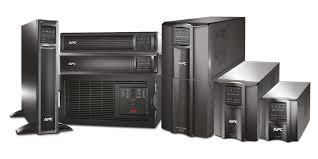
APC UPS Systems in Kenya: Complete Selection and Deployment Guide
Power infrastructure challenges affect every Kenyan business from Nairobi offices to Mombasa manufacturing facilities. Grid voltage swings between 180V and 260V damage sensitive electronics, while unpredictable outages lasting minutes or hours disrupt operations daily. Organizations deploying appropriate uninterruptible power supply systems protect critical equipment, maintain productivity during outages, and extend hardware lifespan by eliminating harmful power fluctuations.
Understanding UPS Technology and Power Protection
An uninterruptible power supply maintains continuous electricity to connected equipment when utility power fails or deteriorates. The UPS contains batteries that store electrical energy, charging while mains power remains available. When the grid fails, internal circuitry immediately switches to battery power, maintaining equipment operation without interruption. This instantaneous transition prevents computers from crashing, servers from losing data, and telecommunications systems from dropping calls.
UPS systems provide two distinct protective functions that organizations often confuse. Power protection addresses voltage irregularities, surges, and frequency variations present even when utility power remains available. Backup power supplies electricity during complete outages, allowing equipment to continue operating or shut down gracefully. Quality UPS systems deliver both functions simultaneously, protecting against power quality problems while providing battery backup during failures.
Load classification determines appropriate UPS deployment. Critical loads require continuous operation during outages—servers storing customer data, network switches maintaining connectivity, security systems protecting facilities, and medical equipment supporting patient care. These devices demand UPS protection ensuring uninterrupted service. Non-critical loads like office lighting, printers, or coffee machines tolerate brief interruptions and connect directly to utility power without UPS protection.
The relationship between volt-amperes (VA) and watts confuses many buyers. VA represents apparent power—the total electrical capacity the UPS can supply. Watts measure real power—the actual energy consumed by equipment. Most IT equipment has a power factor of 0.6-0.9, meaning a device rated at 600 watts draws 750-1000VA. UPS specifications always list VA ratings, requiring conversion to watts when calculating appropriate sizing for specific equipment loads.
APC UPS Product Categories and Applications
APC by Schneider Electric manufactures three primary UPS product lines serving different organizational needs and budgets. Understanding these categories helps organizations select appropriate protection matching their requirements and risk tolerance.
APC Back-UPS Series for Small Business and Home Office
The Back-UPS line provides essential protection for individual workstations, home offices, and small business environments. These entry-level units employ standby (offline) topology, where equipment normally runs on mains power with the UPS monitoring conditions. When voltage drops below acceptable levels or power fails completely, the UPS transfers to battery power within 10-12 milliseconds. Modern computers and peripherals tolerate this brief transfer time without issue.
APC Back-UPS models range from 425VA to 1500VA capacity. A typical configuration might deploy a Back-UPS BX1100C-IN (1100VA/660W) supporting a desktop computer, two monitors, and a router. With this load drawing approximately 400 watts, the UPS provides 10-15 minutes runtime—sufficient for saving work and shutting down gracefully during outages. The battery charges fully within 12-16 hours after depletion, ready for subsequent power failures.
These units include automatic voltage regulation (AVR) through boost and trim circuitry. When input voltage sags to 170-180V (common during peak demand periods in Kenya), the AVR boosts voltage to acceptable 220V levels without switching to battery. Conversely, when voltage spikes to 260-280V, trim circuits reduce it to safe levels. This voltage regulation protects equipment from damage while preserving battery capacity for actual outages rather than depleting batteries during voltage fluctuations.
APC Smart-UPS Series for Enterprise Applications
Smart-UPS systems employ line-interactive topology providing superior protection for servers, network infrastructure, and business-critical workstations. These units continuously regulate voltage through transformer-based AVR, correcting voltage variations from 160V to 280V without battery discharge. The enhanced regulation suits organizations experiencing frequent power quality problems that would quickly exhaust standby UPS batteries.
The Smart-UPS product line spans 500VA to 3000VA in tower configurations, with rack-mount versions available for data center deployment. The APC SMT2200IC Smart-UPS 2200VA LCD exemplifies this category, offering 2200VA/1980W capacity suitable for protecting multiple servers, network switches, and storage systems in enterprise environments. This model features an intuitive LCD display showing real-time power conditions and estimated runtime.
A Smart-UPS SMC1500I (1500VA/900W) typically protects a departmental server, network switch, and internet connectivity equipment. Drawing 600 watts, this configuration achieves 15-20 minutes runtime, allowing the server to complete a graceful shutdown procedure, write cached data to disk, and close database transactions properly.
Smart-UPS units include LCD displays showing real-time information: input voltage, output voltage, battery charge percentage, estimated runtime remaining, and current load level. This visibility helps administrators monitor power conditions, verify equipment remains within safe operating parameters, and anticipate when runtime will exhaust during extended outages. Network management capabilities through optional SmartSlot cards enable remote monitoring and automated shutdown coordination across multiple servers.
Temperature-compensated battery charging extends battery lifespan significantly. The charging circuitry monitors ambient temperature and adjusts charging voltage accordingly. In hot Kenyan climates where server room temperatures reach 28-30°C without air conditioning, this intelligent charging prevents overcharging that accelerates battery aging. Organizations typically achieve 4-5 years battery life with proper temperature management compared to 2-3 years without compensation.
APC Smart-UPS Online for Mission-Critical Protection
Online double-conversion topology delivers premium protection for critical applications tolerating zero power interruptions or quality variations. These systems continuously convert incoming AC power to DC, charging batteries while powering internal circuitry. A second conversion stage transforms DC back to clean AC power feeding connected equipment. This dual conversion eliminates all incoming power problems—surges, sags, harmonics, frequency variations, and noise—delivering perfect sine wave output regardless of input conditions.
The Smart-UPS Online SRT series ranges from 1000VA to 10000VA, serving enterprise data centers, financial trading systems, medical imaging equipment, and industrial control systems. Zero transfer time distinguishes online UPS from other topologies. Because equipment always operates on inverter power derived from batteries, no switching occurs during mains failures. The transition happens transparently as batteries seamlessly supply the DC bus previously fed by the AC-to-DC converter.
An SRT3000XLI (3000VA/2700W) might protect a critical database server with redundant power supplies. Each power supply connects to a separate UPS, creating N+1 redundancy. If either UPS fails or requires maintenance, the server continues operating on the remaining power supply. This configuration costs more than single-UPS protection but eliminates the UPS as a single point of failure for mission-critical systems.
Online UPS systems deliver the highest efficiency when grid power remains stable, typically 94-96% in double-conversion mode. During good power conditions, Eco-mode operation switches to line-interactive topology, boosting efficiency to 98-99% while maintaining sub-2-millisecond transfer to double-conversion during power problems. Organizations concerned about electricity costs can enable Eco-mode, accepting minimal compromise in protection for significant energy savings.
Sizing and Selecting the Right APC UPS
Proper UPS sizing requires calculating total load, determining required runtime, and planning for future growth. Undersized systems fail to protect all equipment or exhaust batteries prematurely. Oversized units waste money on unnecessary capacity while introducing inefficiency since UPS systems operate most efficiently at 50-80% load.
Begin by inventorying all equipment requiring protection and recording power consumption from device labels or specifications. A typical small server configuration might include: server (450W), network switch (35W), router (12W), managed PDU (5W), and external storage array (85W). Total load equals 587 watts. Converting to VA using a conservative 0.7 power factor: 587W ÷ 0.7 = 839VA. Adding 30% growth capacity: 839VA × 1.3 = 1,091VA. Select the next larger standard size: 1500VA.
Runtime calculations require UPS manufacturer specifications since battery capacity and inverter efficiency vary significantly between models. APC provides runtime charts showing how long each UPS model supports different load levels. A Smart-UPS SMC1500I supporting 600 watts (approximately 70% load) provides roughly 15 minutes runtime with factory-installed batteries. Organizations requiring longer runtime can add external battery packs extending operation to 30-60 minutes or more.
Required runtime depends on organizational needs and alternative power availability. Facilities with automatic generator starting systems need only 5-10 minutes UPS runtime, sufficient to bridge the gap between power failure and generator synchronization. Organizations without generators must decide between short runtime enabling graceful shutdown (10-15 minutes) or extended runtime maintaining operations through typical outage durations (30-60 minutes).
Consider total cost of ownership when comparing UPS options. A Smart-UPS costs 40-60% more than equivalent Back-UPS capacity but delivers superior voltage regulation, longer battery life, and network management capabilities. Organizations experiencing frequent power problems find Smart-UPS investment pays for itself through reduced equipment failures and extended battery replacement intervals. Stable power environments may find Back-UPS adequate, especially for non-critical loads.
APC PowerChute Software and Management
APC PowerChute software coordinates graceful equipment shutdown during extended outages, preventing data corruption and hardware damage from improper power-down. The software monitors UPS status through USB or network connections, tracking battery charge levels, remaining runtime, and load conditions. When runtime drops below configured thresholds—typically 5 minutes remaining—PowerChute initiates automated shutdown sequences.
PowerChute Personal Edition provides basic monitoring and shutdown for individual workstations. The software displays UPS status in the system tray, alerting users to power events and battery conditions. Users configure shutdown timing, warning notifications, and alarm preferences. This free software installs from the included CD or downloads from APC’s website, supporting Windows, macOS, and Linux operating systems.
PowerChute Business Edition manages multiple servers and virtual machines from centralized consoles. The software coordinates shutdown sequencing across complex environments—database servers close connections and write cached data before application servers shut down, which complete processing before web servers stop accepting requests. This orchestrated shutdown prevents data inconsistencies and transaction failures that occur when systems power off randomly.
Virtual environment integration allows PowerChute to migrate virtual machines to alternative hosts before shutting down physical servers during outages. A VMware environment with three physical hosts might configure PowerChute to detect low battery conditions, trigger vMotion migrations consolidating all VMs onto two hosts, then shut down the third host preserving battery capacity. This approach maximizes runtime for critical workloads while gracefully powering down non-essential systems.
Email and SMS alerting notify administrators about power events immediately. PowerChute sends notifications when utility power fails, when battery charge drops below thresholds, when overload conditions occur, or when batteries require replacement. Timely alerts enable proactive responses—administrators can shut down non-critical systems to extend runtime, dispatch technicians to investigate power problems, or activate backup procedures before battery exhaustion.
Installation and Configuration Best Practices
Proper UPS installation begins with appropriate electrical infrastructure. UPS input circuits should connect to dedicated breakers, not shared with other high-load equipment. A 1500VA UPS drawing 10-12 amps during battery charging requires a 15-amp circuit minimum. Larger UPS systems demanding 20+ amps need dedicated 20-amp circuits with appropriate receptacles and wire gauge.
Circuit grounding proves critical for safety and proper surge protection. UPS systems require three-wire grounding: line (hot), neutral, and earth ground. Many older Kenyan buildings use two-wire systems without proper grounding. Organizations installing UPS in these environments must retrofit proper three-wire circuits with earth ground connections to building ground rods or municipal water pipes providing effective ground paths.
Physical placement affects UPS performance and longevity. Avoid installing UPS in direct sunlight, near heat sources, or in poorly ventilated spaces. Battery chemistry performs optimally at 20-25°C; each 10°C temperature increase halves battery lifespan. A UPS operating in a 35°C server room experiences twice the battery degradation of identical units in climate-controlled 25°C environments. Budget for more frequent battery replacements or invest in air conditioning maintaining appropriate temperatures.
Allow adequate clearance for ventilation and service access. UPS systems exhaust heat through vented panels, requiring unobstructed airflow. Minimum clearances: 10cm on sides, 15cm behind for ventilation and cable access, 30cm in front for display visibility and door opening. Rack-mount installations require spacing between adjacent equipment preventing heat buildup—don’t stack UPS units directly above heat-generating servers.
Initial startup procedures verify correct installation before connecting critical loads. Power up the UPS without connected equipment, allowing batteries to charge for 12-24 hours. Verify correct input voltage on the LCD display or through PowerChute software. Test battery operation by simulating power failure—disconnect input power and confirm UPS switches to battery, displays appropriate runtime estimates, and sounds alarms as configured. Reconnect input power and verify battery recharge begins automatically.
Battery Management and Replacement Strategies
Sealed lead-acid batteries used in APC UPS systems typically last 3-5 years depending on operating conditions, discharge cycles, and temperature exposure. Batteries degrade gradually, reducing runtime even when charge percentage reads 100%. A three-year-old battery might provide only 60% of its original runtime, requiring replacement before complete failure leaves equipment unprotected.
Self-test procedures verify battery health without waiting for actual power failures. Smart-UPS models perform automatic self-tests every two weeks, applying brief loads to batteries while monitoring voltage response. Healthy batteries maintain steady voltage under load; degraded batteries show rapid voltage drop indicating replacement needs. PowerChute logs test results, alerting administrators to failing batteries before they compromise protection.
Replace batteries proactively rather than reactively. Organizations should budget for battery replacement every 4 years, performing changes before failures occur. Battery replacement costs vary by UPS size: KES 4,000-8,000 for small Back-UPS units, KES 15,000-30,000 for mid-range Smart-UPS systems, and KES 50,000+ for large online models. External battery packs cost proportionally more due to their larger capacity.
Battery disposal requires proper handling due to lead and sulfuric acid content. APC partners with battery distributors offering exchange programs—purchasing new batteries includes disposal of old units. Organizations replacing batteries should never discard them in regular waste. Contact battery suppliers or environmental authorities for approved recycling facilities accepting sealed lead-acid batteries.
Extended battery modules increase UPS runtime without replacing the entire UPS. A Smart-UPS SMT1500I with one external battery pack doubles runtime from 15 to 30 minutes under typical loads. Each additional pack further extends runtime linearly. This modular approach proves cost-effective compared to purchasing larger UPS capacity, especially when organizations need runtime exceeding standard configurations.
Kenya-Specific Deployment Considerations
Kenyan power grid characteristics demand UPS configurations addressing local challenges. Voltage typically varies between 180V and 260V during normal conditions, with wider excursions during grid instability. Line-interactive and online UPS topologies handle these variations without battery discharge, while standby units exhaust batteries quickly from constant voltage correction.
Outage duration patterns influence UPS sizing decisions. Nairobi experiences frequent brief outages (2-10 minutes) caused by grid switching and localized faults. Coastal regions endure longer outages (30-90 minutes) during storms and infrastructure maintenance. Organizations should analyze historical outage data determining typical durations, then size UPS runtime accordingly or integrate with generators for extended backup.
Generator integration requires UPS systems compatible with generator output characteristics. Generators produce voltage and frequency variations during load changes, particularly during startup and shutdown. APC UPS systems include wide input voltage windows and frequency tolerance accommodating generator fluctuations. Configure UPS input sensitivity to “low” when operating with generators, preventing unnecessary battery switching during normal generator operation.
Altitude affects UPS performance in highland locations like Nairobi at 1,600 meters elevation. Reduced air density decreases cooling effectiveness, requiring derating UPS capacity by approximately 5% per 1,000 meters above sea level. Organizations deploying UPS in Nairobi should apply 8% derating—a 1500VA UPS effectively provides 1380VA at this altitude. Consult APC technical documentation for specific derating curves.
Import duties and VAT affect total UPS cost. Kenya applies 25% duty on UPS systems plus 16% VAT on the duty-inclusive price. A UPS with USD $500 manufacturer price costs approximately KES 75,000 landed (at KES 120/USD exchange rate with duties and taxes). Work with established distributors handling import procedures rather than attempting direct imports requiring customs expertise and regulatory compliance knowledge.
Maintenance Schedules and Preventive Care
Monthly visual inspections identify developing problems before failures occur. Check for dust accumulation on ventilation slots, verify status LEDs show normal operation, listen for unusual noises from cooling fans or transformers, and confirm battery charge indicators show full charge. Document inspection findings in maintenance logs tracking UPS condition over time.
Quarterly testing validates UPS protection under load conditions approximating actual usage. Disconnect non-critical equipment, verify remaining load matches UPS specifications, then simulate power failure by removing input power. Monitor runtime against manufacturer specifications, verifying batteries support loads for expected duration. Investigate significant deviations indicating battery degradation or inverter problems requiring professional service.
Annual professional service includes comprehensive testing beyond organizational capabilities. Certified technicians perform load bank testing applying full UPS capacity while monitoring voltage stability, frequency accuracy, and harmonic distortion. They inspect internal components, verify cooling system operation, check electrical connections for corrosion or looseness, and calibrate sensors ensuring accurate readings.
Battery replacement constitutes the most significant recurring maintenance expense. Budget KES 8,000-15,000 annually per UPS for eventual battery replacement costs. Organizations deploying multiple UPS units should stagger replacements across fiscal years spreading expenditures rather than facing large one-time costs when all batteries age simultaneously.
Firmware updates address security vulnerabilities and improve functionality. APC releases periodic updates for Smart-UPS and Smart-UPS Online models with network management cards. Download updates from APC’s website and install during scheduled maintenance windows. Updates typically require brief UPS resets, so plan installations during periods when brief power transfers won’t disrupt operations.
APC UPS systems provide essential power protection and backup for Kenyan organizations facing challenging grid conditions and frequent outages. Proper selection matching load requirements with appropriate UPS topology, correct installation following electrical best practices, and ongoing maintenance ensuring reliable operation deliver years of dependable service protecting critical equipment investments while maintaining business continuity during inevitable power disruptions.
 No products in the cart.