Access Control Systems Guide: Choosing the Right Solution for Your Kenyan Property
Property security in Kenya has evolved significantly beyond traditional lock-and-key systems. Access control technology now enables property owners to monitor and manage who enters specific areas, when they access these spaces, and maintain detailed records of all entry attempts. Whether securing a residential estate gate in Nairobi’s Karen suburb, protecting server rooms in Mombasa’s commercial district, or managing employee access in Nakuru’s industrial area, understanding access control options helps property owners make informed security investments.
This guide examines access control technologies available in Kenya, comparing authentication methods, explaining system components, and analyzing costs to help you select appropriate solutions for your security requirements.
Understanding Access Control Technology
Access control systems replace mechanical keys with electronic authentication that verifies user identity before granting entry. These systems consist of three primary components: credentials that identify users (fingerprints, cards, or PINs), readers that verify these credentials, and locking mechanisms that physically secure entry points.
When someone approaches a secured door, they present their credential to the reader device. The reader compares this credential against authorized user databases, either stored locally in the controller or accessed from centralized servers. If the system confirms authorization, it sends electrical signals releasing electromagnetic locks for predetermined durations—typically 3 to 5 seconds—allowing entry before automatically re-securing.
Modern access control systems record every access attempt, successful or denied, creating audit trails that document facility usage patterns. This data proves valuable for security investigations, attendance tracking, and understanding space utilization across properties.
Authentication Methods: Fingerprint vs RFID vs PIN
Fingerprint Biometric Systems
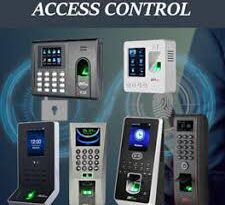
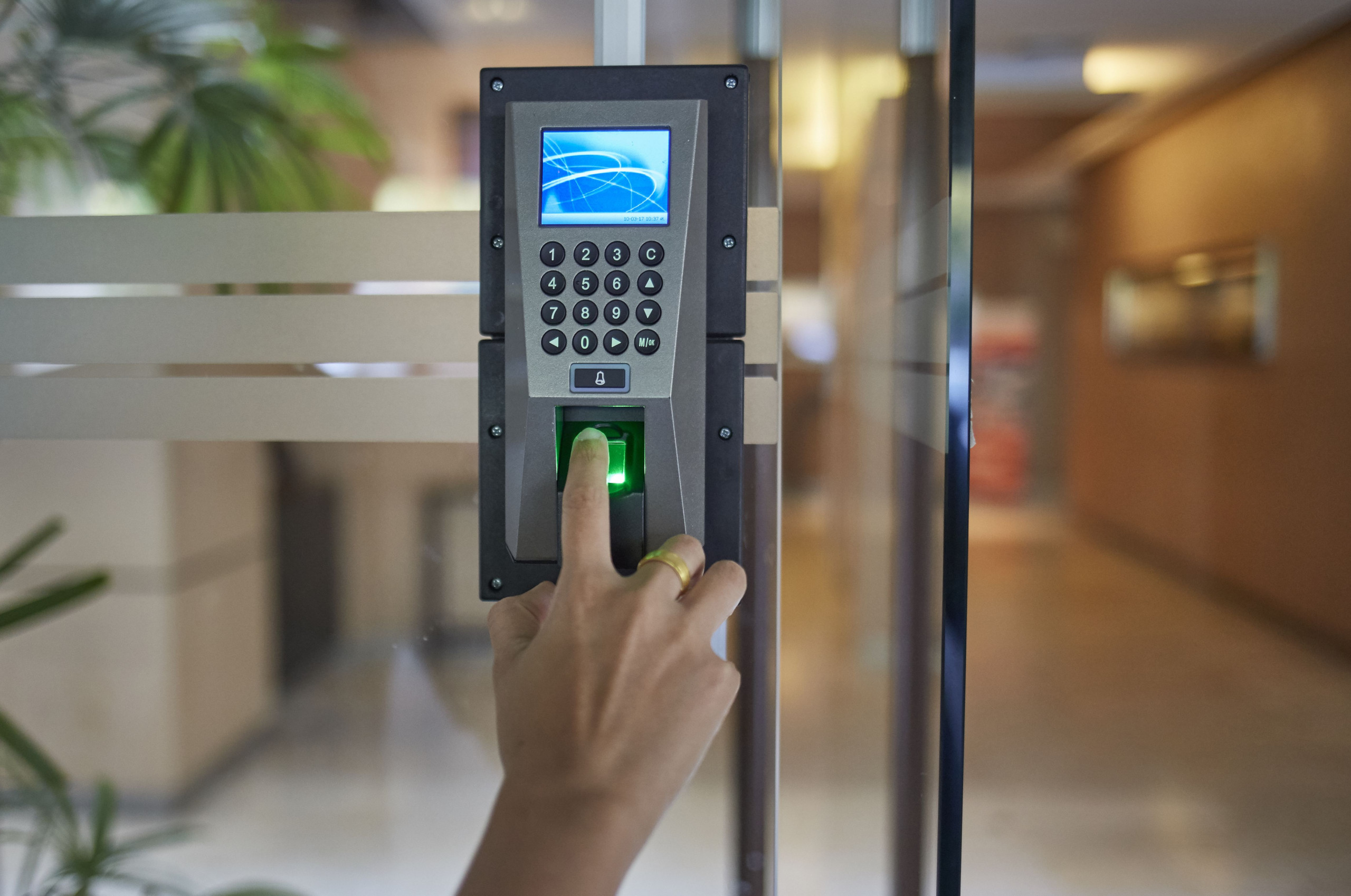
Fingerprint authentication uses optical or capacitive sensors that scan finger ridge patterns, comparing them against stored templates to verify identity. Quality fingerprint readers achieve verification in under 1 second with false acceptance rates below 0.001 percent and false rejection rates under 1 percent.
Advantages for Kenyan deployments:
- Credentials cannot be lost, stolen, or shared between users
- Eliminates card printing and distribution costs
- Provides definitive identity verification for sensitive areas
- Works effectively in office environments with consistent power supply
Limitations:
- Fingerprint quality degrades for manual laborers or individuals with worn fingerprints
- Sensors require regular cleaning in dusty Kenyan environments
- Initial enrollment takes longer than card registration
- Some users express privacy concerns about biometric data storage
Fingerprint systems work well for office access control in Nairobi, Mombasa, and other urban centers where users access facilities regularly and sensor maintenance occurs consistently.
RFID Card Access
Radio-frequency identification cards contain embedded chips and antennas that communicate with readers when held within proximity—typically 5 to 10 centimeters. These contactless credentials offer convenient authentication without physical contact with readers.
Advantages:
- Fast authentication requiring only brief card presentation
- Cards easily replaced if lost or damaged
- Lower cost per user compared to biometric enrollment
- Works reliably in harsh environments with proper reader protection
Limitations:
- Cards can be lost, requiring replacement costs of KES 150 to 300 each
- Users may share cards, compromising security accountability
- Requires card inventory management and distribution logistics
- Cards eventually wear out, requiring periodic replacement
RFID systems suit environments with many users, high turnover, or situations where biometric enrollment proves impractical, such as visitor management or temporary contractor access.
PIN/Keypad Authentication
Personal identification number systems use numeric keypads where users enter 4 to 6 digit codes to gain entry. These represent the simplest access control implementation, requiring no physical credentials.
Advantages:
- Zero credential costs—no cards to purchase or replace
- Simple user enrollment through code assignment
- Easy code changes when security compromises occur
- Works in any environment without special maintenance
Limitations:
- PINs easily shared between users, eliminating accountability
- Codes can be observed and memorized by unauthorized persons
- No verification that the authorized person actually entered
- Users forget codes, requiring administrative assistance
PIN systems work for low-security applications or as backup authentication when primary methods fail, but they provide the weakest security assurance among electronic access control options.
Multi-Factor Authentication
High-security installations combine authentication methods, requiring users to present two factors—typically RFID card plus PIN, or fingerprint plus card. This approach dramatically reduces unauthorized access risk since compromising both factors simultaneously proves extremely difficult.
Multi-factor authentication suits server rooms, cash handling areas, pharmaceutical storage, and other spaces requiring maximum security justification for the added complexity and user inconvenience.
Essential System Components
Controllers and Readers
Access control controllers contain the processing intelligence that verifies credentials and operates locks. Standalone controllers store user databases locally and operate independently, making them suitable for single-door installations or locations without network infrastructure. Networked controllers connect via TCP/IP Ethernet, enabling centralized management across multiple doors and sites.
Quality controllers support 3,000 to 5,000 user records with 100,000 to 1 million transaction log capacity. Processing capabilities determine authentication speed, with modern units completing verification in under 1 second.
Electromagnetic Locks
Magnetic locks use electromagnetic force to secure doors, with common ratings of 280 kilograms (600 pounds) or 600 kilograms (1,200 pounds) holding force. These locks require continuous electrical power to maintain security, automatically releasing during power failures unless configured with backup power systems.
Standard installations use 280kg locks for office doors with normal traffic, while high-security areas, heavy doors, or locations with forced entry concerns require 600kg units. Proper installation ensures lock and strike plate alignment within 3 millimeters to achieve rated holding force.
Power Supply and Backup
Access control systems require 12-volt DC power supplied through dedicated power supplies with battery backup. Kenya’s frequent power interruptions necessitate backup batteries providing 8 to 12 hours of operation, calculated based on lock power consumption and usage frequency.
A typical single-door system with 280kg magnetic lock draws 3 to 5 watts continuously, requiring 12-volt, 7Ah batteries for adequate backup duration. Multi-door installations need proportionally larger battery capacity or distributed power supplies serving individual doors.
Auxiliary Components
Complete installations include exit buttons enabling egress without authentication, emergency break-glass units for fire safety compliance, override key switches for maintenance access, and door position sensors monitoring whether doors close properly after access events. These components ensure installations meet fire safety codes while maintaining security when doors remain properly closed.
Access Control Costs in Kenya
Single-Door Installation
Basic fingerprint access control systems cost KES 63,000 to 85,000 installed, including:
- Fingerprint/RFID controller with 3,000-user capacity
- 280kg electromagnetic lock
- Automatic door closer
- Exit button, break-glass, override switch
- 12V 7Ah backup battery with charging circuit
- Professional installation and configuration
Glass door installations add KES 3,500 to 5,000 for U-brackets designed to mount locks on glass without drilling. Upgrading to 600kg magnetic locks adds approximately KES 8,000 for applications requiring maximum security.
Multi-Door Systems
Networked installations covering 3 to 5 doors cost KES 220,000 to 350,000, providing centralized user management, real-time monitoring, and integration capabilities with time attendance or building management systems. This approach proves more economical than independent standalone controllers at each door while enabling comprehensive access policies across facilities.
Enterprise deployments protecting 10 or more doors require custom quotations based on specific requirements, network infrastructure, integration complexity, and monitoring capabilities.
Operating and Maintenance Costs
Monthly electricity consumption remains minimal at 5 to 10 watts per door, costing KES 50 to 100 in typical Kenyan electricity rates. Battery replacement every 2 to 3 years averages KES 2,500 to 4,000 per door, while annual maintenance contracts cost KES 15,000 to 25,000 for basic service or KES 35,000 to 55,000 for comprehensive support including priority response.
Installation Considerations for Kenyan Properties
Power Infrastructure
Reliable backup power proves essential given Kenya’s electrical grid instability. Systems should connect through uninterruptible power supplies or include sufficient battery capacity for extended outages common in various regions. Commercial properties with generators benefit from automatic transfer switching ensuring continuous operation regardless of grid status.
Network Requirements
IP-based systems require network infrastructure with available Ethernet ports and IP addresses. Properties lacking structured cabling can use WiFi-enabled controllers, though wired connections provide superior reliability for security-critical applications. Remote sites benefit from 3G/4G cellular connectivity enabling monitoring when internet connections prove unreliable.
Environmental Factors
Coastal installations near Mombasa require corrosion-resistant components and protective enclosures for electronics exposed to salt-laden humidity. Dusty environments in semi-arid regions need regular reader cleaning schedules maintaining fingerprint sensor accuracy. Outdoor readers require IP65-rated weatherproof housings protecting against rain and temperature extremes.
Integration Planning
Properties with existing CCTV systems should specify access control with camera integration capabilities, enabling automatic recording when doors open or alarms trigger. Time attendance requirements necessitate controllers supporting attendance software integration, while building automation benefits from access control coordinating with HVAC and lighting systems based on occupancy.
Maintenance Requirements
Weekly visual inspections verify indicator lights function correctly, magnetic locks align properly, and backup batteries maintain charge. Monthly testing should include deliberately triggering access with various credentials, verifying alarm integration, and testing emergency override functions.
Quarterly maintenance involves cleaning fingerprint sensors with approved solutions, testing battery backup capacity under load, and reviewing access logs for anomalies indicating potential security issues or equipment problems. Annual professional service includes firmware updates, comprehensive component testing, and battery replacement if capacity testing reveals degradation below acceptable thresholds.
Choosing the Right Solution
Property type and security requirements determine appropriate access control configurations. Residential properties typically deploy standalone fingerprint systems at main gates, providing family convenience without credential management complexity. Small businesses benefit from networked RFID systems enabling easy credential issuance for employees while maintaining audit trails.
Corporate offices require enterprise platforms supporting hundreds of users, sophisticated access policies restricting entry by time and day, and integration with HR systems automatically provisioning and de-provisioning access as employees join or leave organizations. Industrial facilities prioritize rugged hardware withstanding harsh environments while providing reliable operation despite challenging conditions.
Budget-conscious deployments can phase implementation, starting with critical areas like server rooms or cash handling locations before expanding to general office access. This approach spreads costs while immediately protecting highest-value assets and most sensitive information.
Conclusion
Access control systems provide property security and access management capabilities far exceeding traditional lock-and-key approaches. Understanding authentication method differences, system component requirements, and installation considerations enables property owners to specify appropriate solutions matching security needs with available budgets.
Successful implementations balance security requirements, user convenience, and operational costs while accounting for Kenya-specific factors including power reliability, environmental conditions, and integration with existing security infrastructure. Proper component selection, professional installation, and regular maintenance ensure access control systems deliver reliable protection throughout their 10 to 15 year service lives.
For professional access control consultation, system design, and installation services across Kenya, contact Oraco Security Solutions. Our experienced technicians assess property-specific requirements and recommend appropriate configurations ensuring reliable access management for your residential or commercial property.